



Table of Contents
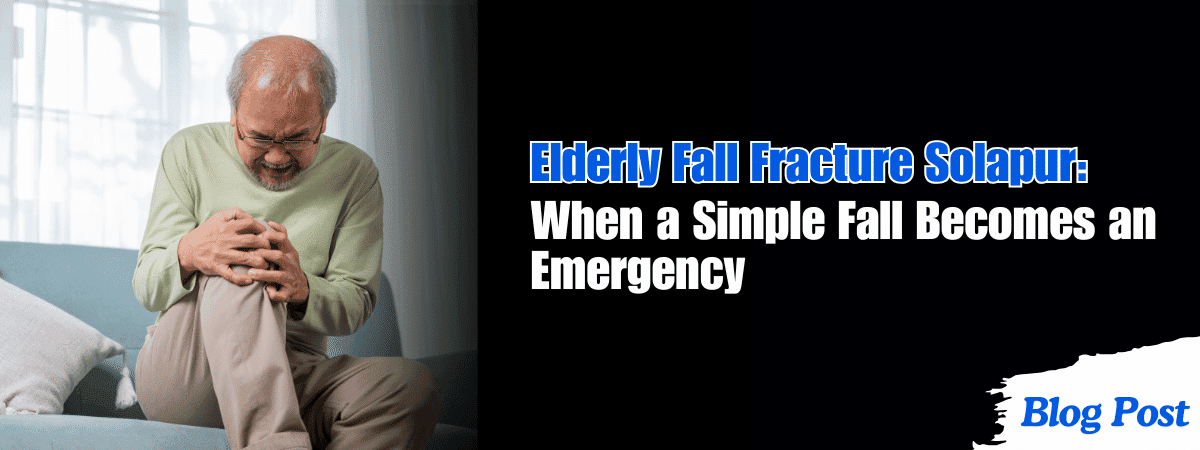
Elderly fall fracture Solapur cases are increasing—especially when senior citizens slip in the bathroom, stumble on uneven roads, or fall while walking at home. What looks like a “small fall” can hide serious injuries like hip fractures, spine compression fractures, or wrist fractures. This guide explains why falls in elderly parents must be treated as an orthopedic emergency in Solapur, what warning signs to watch for, and when to seek urgent medical help.
A fall in an elderly parent can look “minor” at first—just a slip in the bathroom, a stumble on uneven road, or missing a step while getting down from a two-wheeler. Many families in Solapur assume, “Thoda lagla… pan theek hoil.” But in orthopedic practice, we see the opposite: a simple fall can quickly become a major orthopedic emergency—especially in people above 60 years.
In fact, in older adults, the real danger is not just the pain—it’s what the fall can hide: hip fractures, spine injuries, wrist fractures, knee ligament tears, and complications from osteoporosis. Early evaluation can make the difference between a smooth recovery and long-term disability.
This guide is written from an orthopedic surgeon’s perspective to help Solapur families understand:
- Why elderly falls are more dangerous than they look
- Which warning signs indicate a fracture or emergency
- The most common fractures after falls (hip, wrist, spine, shoulder, ankle)
- How osteoporosis makes bones fragile
- What to do immediately after a fall
- When surgery becomes necessary—and how delays worsen outcomes
- Practical fall-prevention tips for Solapur homes and roads
- When to consult Dr. Nikhil Gadre for orthopedic emergency care
To know more about my work and orthopedic approach, you can read:About Dr. Nikhil Gadre
If you want to book a consultation (especially after a fall), Book Appointment
1) Why Falls in Elderly Parents Should Never Be Taken Lightly
As age increases, three things happen:
- Balance reduces (vision, reflexes, inner ear, muscle strength)
- Bones become weaker (often due to osteoporosis)
- Recovery becomes slower (low muscle mass, diabetes, blood pressure issues)
So even a low-impact fall can cause a fracture. The most dangerous part is that some fractures don’t look dramatic—pain may be mild initially, swelling may be minimal, and the person may still try to walk. That’s how complications start.
2) Why Solapur Seniors Are at Higher Risk of Falling
Every city has fall risks, but Solapur has some unique local factors:
Uneven roads and potholes
Many areas have uneven patches, especially during repairs. A small misstep can cause a fall, ankle twist, or hip injury.
Bathroom slips at home
Smooth flooring + water + poor footwear = a classic fall trigger in elderly.
Two-wheeler culture
Even in senior citizens, two-wheelers remain common for short rides. Getting on/off a bike can lead to slips, and sudden braking in traffic can destabilize posture.
Night-time walking and poor lighting
Many elderly wake up at night for urination. Dim light increases fall risk.
Weakness due to inactivity
Many seniors reduce walking due to knee pain or fear of falls—this weakens muscles further, increasing fall risk again.
If knee arthritis is already present, balance gets worse. For arthritis background, refer:
Knee Pain and Osteoarthritis
3) The “Silent” Injuries Families Miss After a Fall
These are common scenarios I see in Solapur:
- “He slipped but only mild pain… so we waited.”
- “She fell but can still stand… so we gave balm.”
- “He is limping… but it will improve.”
What can be missed:
- Hairline fractures
- Hip fractures without obvious deformity
- Vertebral compression fractures (spine)
- Tendon tears around shoulder
- Wrist fractures that swell slowly
- Head injury signs (always check!)
Waiting can lead to displacement of fractures, worsening pain, immobility, blood clots, chest infection from bed rest, and longer rehab.
4) Red Flags: When a Fall Becomes an Orthopedic Emergency
After a fall, treat it as an emergency if you notice:
Hip / leg warning signs
- Unable to stand or walk
- Severe groin pain or hip pain
- One leg looks shorter or rotated
- Pain increases with minimal movement
Spine warning signs
- Severe back pain after fall
- Pain increases on standing
- Sudden height loss or hunching
- New numbness or weakness in legs
Wrist / hand warning signs
- Visible swelling and deformity
- Pain while moving fingers or wrist
- Inability to hold objects
General danger signs
- Confusion, drowsiness
- Vomiting
- Breathing difficulty
- Severe dizziness
If any of these appear, the safest step is orthopedic evaluation immediately.
5) Most Common Fractures After Elderly Falls
A) Hip Fracture (The #1 “life-changing” fracture)
Hip fractures are one of the most serious injuries in elderly parents because they can suddenly make a person bed-ridden.
Families often search directly for hip fracture doctors in Solapur (high intent).
Typical signs:
- Groin pain
- Unable to bear weight
- Leg appears rotated outward
- Pain worsens with movement
In severe arthritis or fracture cases, patients sometimes require hip replacement. For hip-related reading:
Hip Pain & Replacement Surgery in Solapur
Importance of Hip Joint & Total Hip Replacement
B) Wrist Fracture (Often happens when they try to “save themselves”)
Elderly often fall forward and stretch the hand to protect the body—this can fracture the wrist. Even if it looks like a “sprain,” swelling and pain may increase over 24–48 hours.
C) Spine Compression Fracture (Common in osteoporosis)
A small fall can compress vertebrae in fragile bones. This can cause:
- Sudden severe back pain
- Posture worsening
- Reduced height
- Pain while standing/walking
If your family member already has desk-job posture issues or chronic spine pain in the family, learn the posture connection here: Desk Job Spine Pain
D) Shoulder Fracture / Rotator Cuff Injury
A fall on the side can injure shoulder joint or tear tendons, causing pain and stiffness. Related:
Shoulder Pain & Frozen Shoulder Treatment in Solapur
E) Ankle Fracture / Ligament Injury
A misstep on stairs or uneven surface can twist ankle. Sometimes people keep walking, worsening damage.
6) Osteoporosis: The Hidden Reason “Simple Falls” Break Bones
Osteoporosis means bones become porous and brittle. In such bones:
- Even low-impact falls can break hip/wrist/spine
- Fractures heal slower
- Deformities can develop if delayed
That’s why osteoporosis treatment in Solapur is frequently searched.
Clues that osteoporosis may be present:
- Age above 60
- Previous fractures from small injury
- Long-term back pain and hunching
- Low sunlight exposure and low activity
- Poor nutrition, low calcium/vitamin D
- Steroid use for long periods (for asthma/arthritis)
7) What To Do Immediately After an Elderly Parent Falls
Here’s the safest step-by-step approach:
- Do not rush to lift them immediately
Let them remain still for a moment. Sudden movement can worsen fractures. - Check for bleeding and head injury signs
Look for wounds, swelling on head, confusion. - Ask: “Where exactly is the pain?”
Hip/groin pain after fall is a red flag. - Try gentle movement only if safe
If pain is severe, don’t force standing. - Apply cold pack (not direct ice) for swelling
10–15 minutes to reduce swelling. - Avoid massage or “bone setting”
This can worsen fractures and displacements. - Bring them for orthopedic evaluation
X-ray is often needed even if it seems minor.
If the fall happened in a rural area, your family may relate to this practical fracture-care guide:
Fracture Care in Rural Solapur
8) Why Delaying Treatment Can Lead to Surgery
This is the key message for Solapur families:
Delay can turn a stable fracture into an unstable one
A small crack can shift if the person continues walking.
Delay increases complications
Bed rest without proper management can lead to:
- Blood clots
- Bed sores
- Chest infection
- Loss of muscle strength
Delay worsens joint damage
If arthritis is present, delayed treatment can worsen degeneration and later require joint replacement.
For understanding when NOT to delay orthopedic care, read:
When Joint Pain Becomes Unbearable
9) How an Orthopedic Evaluation Works (What We Check)
At consultation, the goal is to identify:
- Is it a fracture?
- Is it ligament/tendon injury?
- Is osteoporosis involved?
- Is there nerve weakness?
- Is surgery required or can it be treated conservatively?
Common tests:
- X-ray
- Sometimes MRI/CT for complex fractures
- Blood tests if infection suspected
Elderly Fall Fracture Solapur Treatment Options (Non-Surgical vs Surgery)
A) Conservative treatment (when suitable)
- Splints/casts for stable fractures
- Pain management
- Physiotherapy (very carefully in seniors)
- Walking aids and balance training
B) Surgery (when necessary)
Surgery may be required when:
- Hip fracture needs fixation or replacement
- Fracture is displaced
- Joint surface is damaged
- Stability cannot be maintained by cast
If surgery is planned, this helps families prepare:
How to Prepare for Orthopedic Surgery
For complex trauma scenarios (accidents/falls), also relevant:
Complex Trauma and Pelvic Acetabular Surgery
11) Fall Prevention Tips for Solapur Homes (Highly Practical)
Small changes save lives:
Home changes
- Anti-skid bathroom mats
- Grab bars in bathroom
- Good lighting in hallway
- Remove loose rugs/wires
- Keep frequently used items within easy reach
Health habits
- Regular walking + balance exercises
- Strengthen legs (simple supervised exercises)
- Vitamin D + calcium as advised
- Eye check-up and footwear check
- Treat knee pain early to reduce limping and imbalance
If morning stiffness is common, it increases fall risk too—see:
Morning Joint Stiffness Explained
12) When to Consult an Orthopedic Surgeon in Solapur
Consult quickly if:
- Pain persists beyond 24–48 hours after fall
- Hip/groin pain exists
- They can’t walk normally
- Swelling increases
- Back pain is severe after fall
- They’ve had previous fractures or likely osteoporosis
If your parent has pain, swelling, or difficulty walking after a fall, treat it as an elderly fall fracture Solapur emergency and consult an orthopedic specialist without delay. Book your consultation here
Why are falls more dangerous in elderly parents?
Because bones become weaker (often osteoporosis) and balance reduces, so even a small fall can cause serious fractures like hip or spine fractures.
How do I know if my parent has a hip fracture after a fall?
If there is groin/hip pain, inability to bear weight, or the leg looks rotated or shorter, treat it as an emergency and get an X-ray.
Can a “minor fall” still cause a fracture?
Yes. In osteoporosis, even low-impact falls can cause wrist, hip, or spine fractures.
When should I take my parent to an orthopedic doctor in Solapur after a fall?
If pain lasts more than 24–48 hours, walking becomes difficult, swelling increases, or there is back/hip pain—consult immediately.
Can delaying treatment after a fall lead to surgery?
Yes. A stable fracture can become displaced, and complications can increase, making surgery more likely and recovery longer.
Add a Comment