



Table of Contents
A sudden pain at the back of your ankle, persistent stiffness above the heel, or difficulty pushing off while walking can make even simple daily activities uncomfortable. Many people assume that pain near the heel is just a minor strain and try to continue walking, working, exercising, or playing sports despite the discomfort.
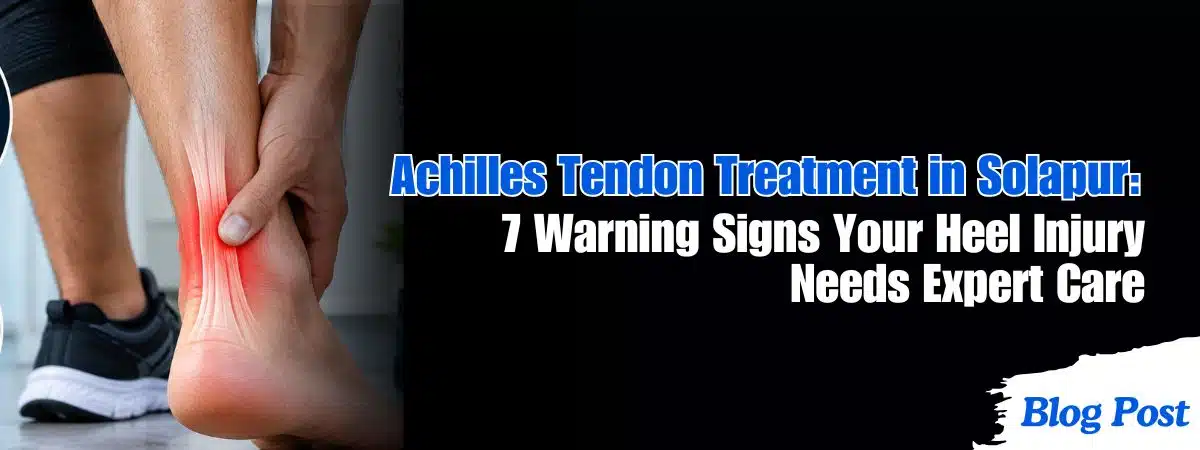
However, pain in this area may sometimes involve the Achilles tendon—the strong band of tissue that connects your calf muscles to your heel bone. Achilles tendon problems can range from mild irritation and tendinopathy to a partial or complete tendon tear.
If you are experiencing persistent pain, swelling, weakness, or difficulty walking, timely Achilles tendon treatment in Solapur can help identify the cause and guide appropriate treatment.
Dr. Nikhil Gadre, MS Orthopaedics, is an orthopaedic surgeon in Solapur with expertise in sports injuries, trauma and orthopaedic conditions affecting the lower limb. A proper clinical examination and, when necessary, imaging can help determine whether your symptoms are caused by tendon irritation, degeneration, a partial tear, a complete rupture, or another foot and ankle problem.
This guide explains the warning signs, causes, diagnosis and treatment options for Achilles tendon injuries in simple, patient-friendly language.
What Is the Achilles Tendon?
The Achilles tendon is the largest tendon in the human body. It connects the calf muscles at the back of the lower leg to the heel bone.
It plays an important role in movements such as:
- Walking
- Running
- Climbing stairs
- Jumping
- Standing on your toes
- Pushing off the ground while taking a step
Because the tendon carries significant force during movement, it can become irritated or injured due to overuse, sudden increases in physical activity, sports injuries, falls, or other trauma.
Achilles tendon problems should not be confused with every type of heel pain. For example, pain on the bottom of the heel may be related to plantar fasciitis, which is discussed in our guide on heel pain and plantar fasciitis in Solapur.
The location and nature of the pain can provide important clues, but a proper diagnosis is essential before starting treatment.
7 Warning Signs You May Need Achilles Tendon Treatment in Solapur
1. Persistent Pain at the Back of the Heel
One of the most common symptoms is pain located at the back of the ankle, particularly just above the heel bone.
The discomfort may:
- Start gradually
- Feel worse during walking or running
- Increase after exercise
- Improve temporarily with rest
- Return when activity resumes
Early Achilles tendon irritation may seem manageable. However, repeatedly continuing activities that aggravate the tendon can worsen symptoms.
Persistent pain deserves evaluation, particularly if it is affecting your ability to walk, work, exercise, or climb stairs.
2. Morning Stiffness That Improves After Moving
Some people with Achilles tendon problems notice stiffness when they first get out of bed.
The tendon may feel:
- Tight
- Stiff
- Painful during the first few steps
- More flexible after moving around
Although the symptoms may improve temporarily, recurring morning stiffness should not be ignored.
Persistent stiffness can also occur with other musculoskeletal conditions. You can learn more about the significance of ongoing stiffness in our article on morning joint stiffness and when to see a doctor.
3. Swelling or Thickening Above the Heel
An injured or irritated tendon may develop swelling around the affected area.
You may notice:
- A visible bump or thickening
- Tenderness when touching the tendon
- Swelling after activity
- Tightness around the back of the ankle
Not every swollen ankle is caused by an Achilles tendon problem. Swelling can also occur because of ligament injuries, fractures and other conditions.
If swelling persists or follows an injury, read our guide on persistent knee or ankle swelling and consider an orthopaedic assessment.
4. Pain That Gets Worse During Running, Sports or Walking
Achilles tendon injuries are common among people involved in activities that place repeated stress on the calf and ankle.
This includes:
- Running
- Football
- Cricket
- Badminton
- Gym training
- Jumping activities
- Long-distance walking
- Sudden increases in exercise
Pain that repeatedly appears during activity should not simply be treated by pushing through it.
For athletes and physically active individuals, a proper assessment can help identify the injury and develop a safer return-to-activity plan. You can also explore Dr. Gadre’s sports injury treatment services.
5. A Sudden “Pop” or Sharp Pain in the Back of the Ankle
A sudden popping sensation followed by severe pain may indicate a serious tendon injury.
Some people describe the feeling as though:
“Someone kicked or hit the back of my leg.”
A complete Achilles tendon rupture can cause sudden pain, weakness and difficulty pushing off the foot.
This type of injury requires prompt medical assessment. Do not attempt to continue walking, running, or playing sports to “test” the injury.
6. Difficulty Standing on Your Toes
The Achilles tendon is essential for pushing the foot downward.
If the tendon is severely injured, you may have difficulty:
- Standing on your toes
- Pushing off while walking
- Climbing stairs
- Running
- Jumping
Sudden weakness following an injury should be evaluated promptly.
7. You Cannot Walk Normally After an Injury
If pain or weakness causes you to limp significantly or prevents normal walking, professional assessment is important.
Seek urgent orthopaedic evaluation if you experience:
- Sudden severe pain
- A popping sensation
- Inability to push off the foot
- Significant weakness
- Rapid swelling
- Deformity
- Inability to bear weight after trauma
If the injury occurred during a road accident or major trauma, more than one structure may be involved. Dr. Gadre’s practice also provides care for accidents and polytrauma and complex trauma.
What Causes Achilles Tendon Pain?
Achilles tendon problems can develop gradually or occur suddenly.
Common causes include the following.
Overuse
Repeated stress without adequate recovery can irritate the tendon. This is common when people suddenly increase:
- Running distance
- Exercise intensity
- Sports participation
- Walking activity
- Hill climbing
Sudden Increase in Physical Activity
Starting intense exercise after a long period of inactivity can overload the calf and Achilles tendon.
A gradual increase in activity is generally safer than making sudden major changes to an exercise routine.
Sports Injuries
Sudden acceleration, jumping, twisting or pushing off forcefully can injure the tendon.
Sports-related injuries may involve other parts of the lower limb as well. Athletes with knee or ligament symptoms may also benefit from information about ACL injuries and ACL surgery in Solapur.
Tight Calf Muscles
Limited flexibility in the calf muscles may increase stress on the Achilles tendon during movement.
Improper Training or Footwear
Training errors, poor conditioning and unsuitable footwear may contribute to repetitive stress in some individuals.
Trauma
A fall, accident or direct injury can cause an acute tendon injury.
Tendon Degeneration
In some cases, changes in the tendon can develop gradually over time, making it more vulnerable to injury.
Who Is at Risk of an Achilles Tendon Injury?
Anyone can develop Achilles tendon pain, but certain situations may increase the risk.
These include:
- Regular participation in running or jumping sports
- Sudden increases in exercise
- Poor conditioning
- Previous tendon problems
- Tight calf muscles
- Increasing age
- Certain medications or medical conditions
A person’s individual risk depends on several factors. An orthopaedic assessment can help identify possible contributing causes.
Achilles Tendonitis, Tendinopathy and Rupture: What Is the Difference?
People often use the term “Achilles tendonitis” for any Achilles pain. However, not all tendon problems are the same.
| Condition | What It May Involve | Typical Symptoms |
| Achilles tendon irritation | Early tendon overload | Mild pain and stiffness |
| Achilles tendinopathy | Ongoing tendon changes and degeneration | Persistent pain, stiffness or thickening |
| Partial tear | Some tendon fibres are damaged | Pain, weakness and reduced function |
| Complete rupture | The tendon is completely torn | Sudden pain, weakness and difficulty pushing off |
The exact diagnosis cannot always be determined from symptoms alone.
This is why persistent or sudden severe symptoms may require a clinical examination and, in selected cases, imaging such as ultrasound or MRI.
How Is an Achilles Tendon Injury Diagnosed?
Proper Achilles tendon pain treatment begins with identifying the exact problem.
An orthopaedic evaluation may include the following.
Medical History
The doctor may ask:
- When did the pain begin?
- Did the injury occur suddenly?
- Was there a popping sensation?
- Does pain occur during walking or sports?
- Have you recently increased physical activity?
- Have you had a previous ankle or tendon injury?
Physical Examination
The ankle, calf and Achilles tendon may be examined for:
- Tenderness
- Swelling
- Thickening
- Weakness
- Range of movement
- Ability to stand on the toes
- Signs suggesting a tendon tear
Imaging When Necessary
Depending on the symptoms and examination findings, imaging may be recommended.
Ultrasound
Ultrasound can help evaluate the tendon and may identify structural abnormalities or tears.
MRI
MRI may be considered in selected situations, particularly when more detailed information about the tendon or surrounding structures is needed.
X-Ray
An X-ray does not directly show the Achilles tendon but may help evaluate the bones or identify other causes of pain.
Not every patient requires every test. The choice depends on the clinical situation.
Achilles Tendon Treatment in Solapur: What Are the Options?
The right Achilles tendon treatment in Solapur depends on several factors, including:
- The type of injury
- Severity
- Whether the tendon is partially or completely torn
- Duration of symptoms
- Activity level
- Overall health
- Functional requirements
Treatment should be individualised.
Non-Surgical Treatment for Achilles Tendon Pain
Many tendon problems can initially be managed without surgery.
Activity Modification
Temporarily reducing activities that worsen pain may help prevent further irritation.
This does not always mean complete inactivity. The appropriate level of activity should depend on the injury and medical advice.
Ice for Short-Term Symptom Relief
Cold therapy may help reduce pain or swelling after activity or an acute injury.
Avoid applying ice directly to the skin.
Supportive Devices
Depending on the injury, a doctor may recommend:
- An ankle brace
- Walking boot
- Heel lift
- Other supportive measures
These should be used only when appropriate for the diagnosis.
Physiotherapy and Rehabilitation
A structured rehabilitation program may help improve:
- Strength
- Flexibility
- Calf muscle function
- Ankle movement
- Gradual return to activity
Exercise programs should be tailored to the individual’s condition. Exercises that are helpful for one type of tendon problem may not be appropriate immediately after a significant tear.
Pain Management
Medication may sometimes be recommended to manage pain, depending on the patient’s overall health and medical history.
Avoid self-medicating for prolonged periods without medical advice.
When Is Surgery Considered for an Achilles Tendon Injury?
Surgery is not required for every Achilles tendon problem.
However, surgical treatment may be considered in selected cases, such as certain complete ruptures or situations where appropriate non-surgical treatment has not provided sufficient improvement.
The decision may depend on:
- Type and location of the tear
- Time since injury
- Functional demands
- Overall health
- Activity level
- Tendon condition
A complete rupture is a significant injury and requires an individualised discussion about treatment options.
If a patient has suffered multiple injuries during a major accident, specialised complex trauma care may also be relevant depending on the nature of the injury.
Recovery After an Achilles Tendon Injury
Recovery depends significantly on the severity and type of injury.
A mild tendon problem may improve with appropriate treatment and rehabilitation, while a tendon rupture generally requires a much longer recovery process.
Recovery commonly involves stages such as:
- Protecting the injured tendon
- Gradually restoring movement
- Improving strength
- Rebuilding balance and function
- Gradual return to normal activities
- Sport-specific rehabilitation where appropriate
Returning to intense physical activity too early may increase the risk of further injury.
The recovery plan should be based on regular clinical assessment rather than a fixed timeline taken from the internet.
Can You Walk With an Achilles Tendon Tear?
Sometimes, yes. The ability to walk does not necessarily rule out a significant Achilles tendon injury.
A person with a partial tear or even some complete ruptures may still be able to walk to some extent, although weakness and difficulty pushing off the foot can occur.
Therefore, if you experienced:
- A sudden pop
- Sharp pain
- Sudden weakness
- Difficulty standing on your toes
do not assume the injury is minor simply because you can still take a few steps.
What Should You Do Immediately After a Suspected Achilles Tendon Injury?
If you experience sudden severe pain or suspect a significant tendon injury:
- Stop the activity immediately.
- Avoid running or jumping.
- Do not repeatedly test the injured leg.
- Rest the area and avoid unnecessary weight-bearing if walking is difficult.
- Seek medical assessment promptly.
Do not massage or aggressively stretch a suspected acute tendon rupture.
How to Prevent Achilles Tendon Injuries
Although not every injury can be prevented, certain habits may reduce avoidable stress on the tendon.
Increase Activity Gradually
Avoid suddenly doubling your running distance or exercise intensity.
Warm Up Before Exercise
A proper warm-up prepares muscles and joints for activity.
Maintain Calf Strength and Flexibility
A balanced conditioning program can support normal lower-leg function.
Use Appropriate Footwear
Choose footwear appropriate for your activity and ensure that worn-out shoes are replaced when necessary.
Listen to Persistent Pain
Pain that repeatedly returns during exercise should not be ignored.
Allow Adequate Recovery
Training without adequate rest may contribute to overuse injuries.
Achilles Tendon Pain or Plantar Fasciitis: How Are They Different?
Both conditions can cause heel discomfort, but the location of pain is often different.
Achilles Tendon Pain
Usually felt:
- At the back of the heel
- Just above the heel bone
- Along the tendon
Plantar Fasciitis
More commonly causes pain:
- On the bottom of the heel
- During the first steps after rest
- Along the sole of the foot
However, symptoms can overlap, and self-diagnosis is not always reliable.
For more information about plantar fasciitis, read our guide on understanding plantar fasciitis.
When Should You See an Achilles Tendon Specialist in Solapur?
You should consider consulting an orthopaedic specialist if you have:
- Pain lasting more than a few days and not improving
- Recurrent Achilles tendon pain
- Significant swelling or thickening
- Pain affecting walking or work
- A sudden popping sensation
- Difficulty standing on your toes
- Sudden weakness in the ankle
- Pain following a sports injury or accident
Early evaluation can help determine whether the problem is mild tendon irritation or a more serious injury.
Patients from Solapur, Akkalkot, Pandharpur, Barshi, Mohol, Sangola, Mangalwedha, Tuljapur, Osmanabad and nearby areas can seek an orthopaedic evaluation based on the severity and nature of their symptoms.
If persistent pain is affecting your mobility, you can book an appointment with Dr. Nikhil Gadre for appropriate assessment and guidance.
Why Choose Dr. Nikhil Gadre for Orthopaedic Care in Solapur?
Dr. Nikhil Gadre is an MS Orthopaedics specialist and Head of the Orthopaedic Department at Yashodhara Super Speciality Hospital, Solapur.
His orthopaedic expertise includes areas such as:
- Sports injuries
- Arthroscopy
- Trauma care
- Complex orthopaedic injuries
- Joint replacement
- Foot and ankle-related orthopaedic problems
For patients with persistent pain or injury, the focus should be on an accurate diagnosis and an individualised treatment plan rather than assuming that every tendon problem requires surgery.
You can also learn more about Dr. Nikhil Gadre’s orthopaedic expertise in Solapur.
Don’t Ignore Persistent Pain at the Back of Your Heel
Achilles tendon pain may begin as mild discomfort, but persistent symptoms deserve attention—especially when pain interferes with walking, work, exercise or sports.
A sudden pop, severe pain or inability to push off the foot can indicate a more serious injury and should be assessed promptly.
For patients seeking Achilles tendon treatment in Solapur, an orthopaedic evaluation can help identify the underlying cause and determine whether non-surgical treatment, rehabilitation or another intervention is appropriate.
If persistent Achilles tendon pain or an ankle injury is affecting your mobility, schedule an orthopaedic consultation with Dr. Nikhil Gadre.
FAQs
Q1: Is Achilles tendon pain serious?
Achilles tendon pain can range from mild irritation to a partial or complete tear. Persistent pain, sudden weakness, a popping sensation or difficulty walking should be medically evaluated.
Q2: What is the best Achilles tendon pain treatment?
The best Achilles tendon pain treatment depends on the exact diagnosis. Treatment may include activity modification, supportive devices, rehabilitation and, in selected cases, surgery.
Q3: Can an Achilles tendon heal without surgery?
Some Achilles tendon conditions and certain tears may be managed without surgery, depending on the injury and the individual patient. A complete assessment is necessary to determine the most appropriate treatment.
Q4: How long does Achilles tendon recovery take?
Recovery time varies depending on whether the problem is mild tendinopathy, a partial tear or a complete rupture. Rehabilitation and return to activity should be guided by the treating orthopaedic specialist.
Q5: Should I walk with Achilles tendon pain?
If walking increases pain significantly, or if you have sudden weakness or suspect a tear, avoid forcing the activity and seek medical advice.
Add a Comment